.png?width=1816&height=566&name=brandmark-design%20(83).png "Tech Channels - IT News, Resources & Insights")
More than 2,100 ransomware incidents targeted U.S. critical infrastructure in 2025 alone, nearly double the number of reported data breach threats across the same sectors (GovTech, 2026). The latest figures from the FBI’s Internet Crime Complaint Center challenge the framing that ransomware as a persistent threat, something cyclical, almost predictable in its evolution.
What we are seeing is a move away from data as the primary objective and toward operational disruption as the real leverage point.
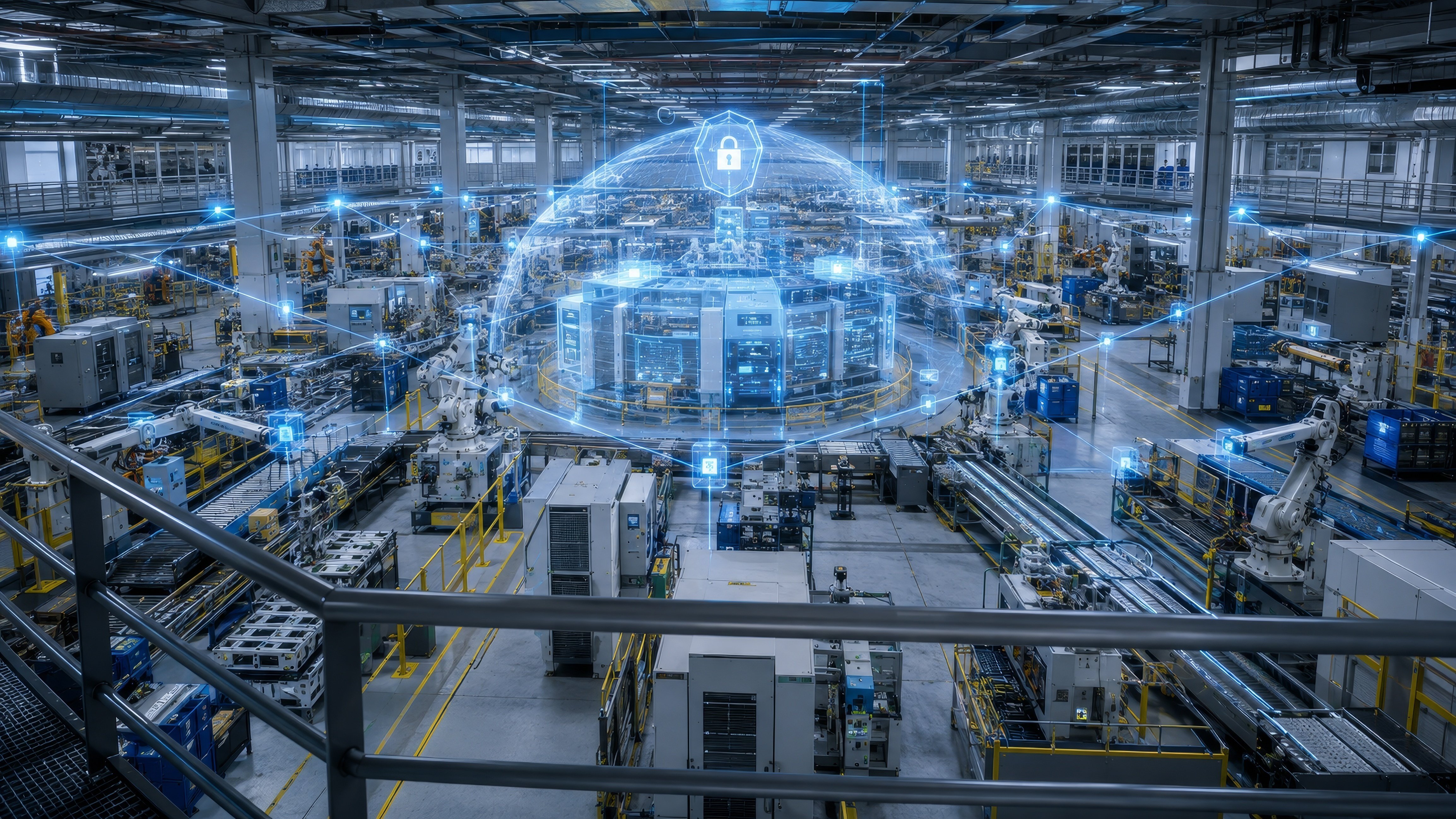
Critical infrastructure, by design, cannot afford downtime. Hospitals cannot pause operations. Energy grids cannot “fail gracefully.” Manufacturing lines cannot simply restart without consequence. Ransomware exploits the one constraint these systems cannot escape: continuity. Groups like Akira, Qilin, and Lynx are not operating as isolated actors but as structured, scalable businesses. Their model, ransomware-as-a-service, reflects a shift toward industrialization within cybercrime.
Access is often gained through something deceptively simple: compromised credentials. From there, attackers move laterally, disable security processes, delete backups, and encrypt systems. The addition of double extortion, where data is both stolen and locked, reinforces the pressure from multiple angles.
Rather than opportunistic hacking this is an operational strategy. And it uncomfortably mirrors the way modern infrastructure itself is designed. Distributed, interconnected, and dependent on identity-based access. The same characteristics that enable scalability and efficiency also expand the attack surface.
Modern infrastructure is built for speed. Continuous deployment, automated pipelines, cloud-native architectures. These systems prioritize agility, often assuming that visibility and control can catch up later. In many cases, they do not. When attackers rely on compromised credentials, they are not breaking systems in the traditional sense. They are using them as designed. They log in, escalate privileges, and move through environments that trust internal activity far more than they scrutinize it.
The FBI’s reported financial losses, exceeding $32 million across ransomware incidents in 2025, offer only a partial view of the impact. These figures do not account for downtime, recovery efforts, or the broader disruption to services that these attacks can cause. In sectors like healthcare or energy, the true cost extends beyond financial metrics into areas that are harder to quantify but far more significant in their societal impact.
If attackers operate with a fundamental understanding of how systems function, are those same systems defended with an equivalent depth of insight?
Addressing this challenge requires moving beyond traditional security models that focus primarily on prevention and perimeter defense. While these remain important, they are no longer sufficient on their own. What is needed is a more integrated approach that combines security with observability, enabling organizations to see not just that something is happening, but how and why it is happening in real time. This level of understanding allows for a different kind of response, one that is not solely reactive but capable of identifying subtle deviations in behavior before they escalate into full-scale incidents.
Ultimately, the persistence and evolution of ransomware reflect a broader imbalance between how systems are built and how they are secured. As infrastructure becomes more interconnected and more dependent on continuous operation, the potential impact of disruption increases. At the same time, the mechanisms used to monitor and protect these systems have not always kept pace with their complexity.
Until organizations close that gap at the level of architecture, visibility, and operational understanding, the threat will continue to evolve in both scale and sophistication.