.png?width=1816&height=566&name=brandmark-design%20(83).png "Tech Channels - IT News, Resources & Insights")
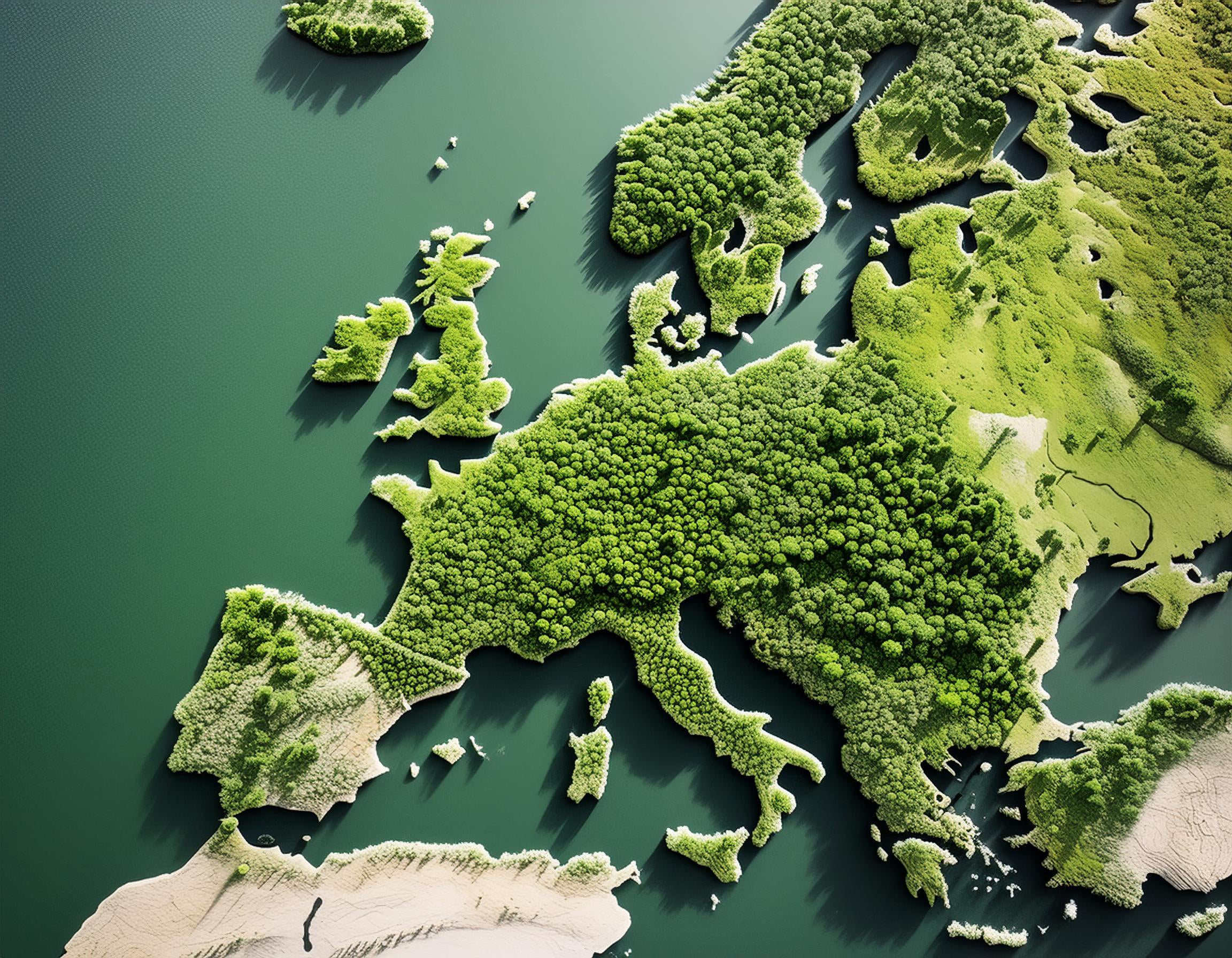
Sustainability claims are about to face tougher scrutiny across the European Union as the bloc’s regulators crack down on so-called greenwashing. Greenwashing is the practice of making false or misleading claims to make an organization, product or service appear more environmentally friendly than it really is. The practice has proven alarmingly common too, with 58% of global executives admitting that their companies had overstated their sustainability efforts, according to a 2022 report by Google.
In Europe’s case, new rules introduced under the EU’s Empowering Consumers for Green Transition Directive will start being applied across all 27 member states from September 27, 2026. The rules cover companies selling products or services to EU consumers, regardless of where they’re headquartered. This includes financial institutions and fintechs promoting consumer-facing products using environmental claims. The European Commission published its final Q&A guidance on September 22 to help companies prepare for the change.
Among the most significant changes are restrictions on generic, and admittedly commonly overused, claims such as “green,” “eco-friendly” or “climate-friendly.” Companies will no longer be permitted to make such claims, unless they can demonstrate verifiable proof in the form of excellent environmental performance as it relates to the claim. More specific statements remain possible, provided companies are clear about precisely what environmental characteristic they’re referring to.
In practice, the new rules discourage companies from using broad sustainability language in their marketing, instead pushing them toward claims supported by measurable and verifiable information. For example, they generally won’t be allowed to display voluntary sustainability labels, unless they’re based on a recognized certification scheme from a public authority. This specifically targets the common problem of companies using self-created sustainability labels designed to give consumers the impression that a product or service has received independent environmental validation when it in fact hasn’t.
The rules also address carbon-neutral claims, where companies will no longer be allowed to advertise their products or services as climate-neutral, carbon-neutral or otherwise having a reduced environmental impact in cases when that claim relies on greenhouse-gas offsets outside the product’s own value chain. However, companies will still be allowed to communicate their investments in carbon-credit and other sustainability projects, provided they don’t use those statements as evidence that a product itself has no climate impact.
The development is particularly significant for fintechs doing business in the EU, because it extends far beyond simply rewriting product descriptions and marketing copy. Fintechs might not have the same direct environmental impact as manufacturers or utility companies, but their indirect impact can still be substantial elsewhere in their value chains. For instance, this might include the energy consumed due to increasing reliance on cloud infrastructure, data centers and compute-intensive AI workloads. As such, any consumer-facing environmental claim must take into account the accuracy of underlying sustainability data, how that data is collected, and whether the evidence actually supports the scope of the claim. As the EU’s new rules make clear, the broader goal is to make sustainability claims resemble any other regulated product information.