.png?width=1816&height=566&name=brandmark-design%20(83).png "Tech Channels - IT News, Resources & Insights")

As AI reshapes cybersecurity, much of the conversation has focused on automation, autonomous agents, and the accelerating pace of technological change. While AI is transforming both defenders and attackers, the most valuable differentiator remains human judgment.
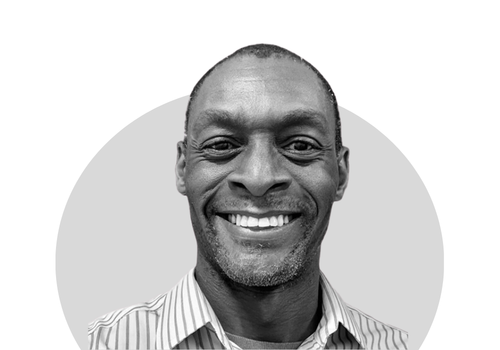
Adam Darrah, Vice President of Intelligence at ZeroFox, offers a different perspective on how cybercriminals are adopting AI, why organizations are placing renewed value on human expertise, and why trusted advisors are becoming even more important as executives navigate an increasingly complex threat landscape. Rather than replacing people, AI is changing how organizations leverage human intelligence to make better security decisions.
Q. How is the criminal class viewing AI?
A. The underground economy is a mirror of the real world. The same things that we're struggling with—adoption, security, staffing, expertise—all that, the costs associated with tokens and whatever—they are also having to consider as well. Here's how AI currently is being used to facilitate attacks against law-abiding, tax-paying corporations and people—to extract ransom, to extract money, to steal more of our credentials, to sell data. I'm trying to provide context around that.
Q. What concerns are you hearing from customers?
A. So far, I would say that we're all pretty nervous about the same things. We all see things moving at a speed that's intimidating. It's kind of expensive to wander around buying tools, buying things, hiring people with the hopes of finding that utopia. That agentic utopia. The easy button to push when you turn on your computer."
Is that going to happen? I don't know if you really want that. I think that's a human discussion to have.
Q. Why are people still so important in cybersecurity?
A. What I do is very people focused, people centered. The cyber intelligence that I focus on is human-led like talking to a bad guy or having a relationship with a human at a keyboard. Whether it's a business relationship, a friendly relationship, a collegial relationship, that takes a human. We can't train a bot to do that yet. And, I hope we never do.
Q. Has AI changed what customers value most? Is it actually increasing the demand for human expertise?
A. Humans and services are now a perceived scarcity. We are now gaining much more interest in our human-led services. Customers are onboarding. Existing clients are upgrading their packages with us. They say they don't have money for people, but have money for tech and solutions. They can't hire people, but they still want people. The services side of things at Zero Fox has seen an unprecedented uptick, which is an interesting side effect to the rush to AI.
Q. Why are customers seeking more direct human guidance?
A. People like knowing there's a break glass in case of emergency. There's also a comfort that comes with somebody who is not in the weeds. I'm outside of their day to day. I have at least four new clients that all they want from me is... “I read this in the paper. What is your take on this? Can I file this away? Can I file this in my file cabinet under just fear mongering?'"
There is some peace of mind contacting a human. People are herd animals. We need people.
Q. Why do organizations still rely on experienced analysts?
A. Quite frankly, they like the anecdotal context about what our humans have learned over the many years playing in this environment. Again, it can provide peace of mind."
Q. How are you thinking about AI within your own organization? Will it replace people?
A. We're definitely feeling the pressure to become more efficient. Thankfully I'm being reasonably asked reasonable things instead of trying to AI myself out of a career. It's not a fun thing to talk about. It’s like my dad used to say when AOL first came out: “This AOL thing is going to be big.” And now I think, yes, this (AI) is a thing. It's here. You still need people to orchestrate things. Services have become, interestingly, more valuable instead of the other way around.
Q. Should organizations be afraid of AI?
A. I don't believe that tech companies rush to market with reckless abandonment. Do they rush to market? Yes. Do they rush to market knowing there are all these flaws? No, I don't think they do that. Should we be afraid? No. Should we be skeptical? Yeah. Security people are always going to be sticks in the mud. It's for good reason. Security people's job is to pump the brakes and let's make sure we've got everything in place. Humans are flawed. When flawed individuals make brilliant technology, there are going to be some flaws. People should remain vigilant. Security professionals should remain vigilant."
I'm not one of these people that sees doom and gloom around this thing. But is the potential there? Absolutely.
Q. Have buying decisions evolved as AI becomes a strategic priority?
A. There's been a shift. The most interesting shift is that there is more executive presence on our calls, more deference to the practitioners, more deference to the senior people. It's a very humbling thing to see. The executives are not necessarily making the decisions. They're deferring to people who know. “What do they think? If they think yes, we're buying. 'If they think no, we're not buying.”
I'm seeing a lot more deference to people who are comfortable in this space and who are knowledgeable and have some gravitas and a good relationship with their leaders.
AI is increasing—not diminishing—the value of human expertise. While organizations continue investing in automation and AI-enabled security capabilities, they are simultaneously placing greater importance on experienced practitioners who can provide context, judgment, and trusted advice that technology alone cannot deliver.
Perhaps the most compelling insight is that AI is creating an unexpected scarcity: trusted human intelligence. As executives navigate an increasingly complex and fast-moving cyber landscape, they are relying more heavily on practitioners with deep operational experience to validate information, interpret emerging risks, and guide strategic decisions. In the AI era, technology may accelerate security operations, but human judgment remains the foundation of resilient decision-making.