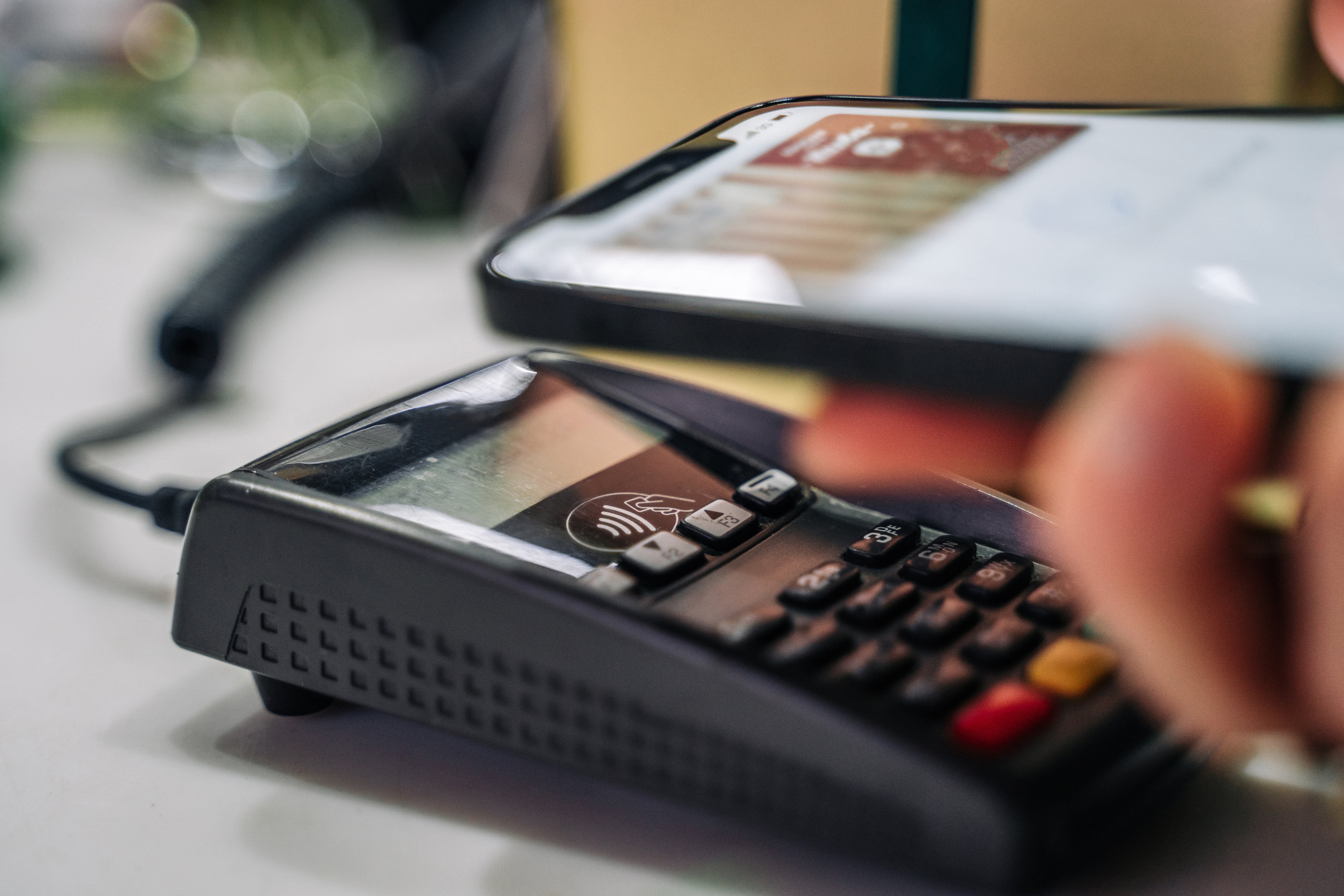
The UK’s Competition and Markets Authority (CMA) has proposed changes that would make it easier and cheaper for banks and fintech companies to provide contactless payment services on iPhones. The plans, announced on October 20, would address Apple’s access fees and technical restrictions, which the CMA says can hinder rival services. If adopted, the proposed requirements could give rival developers broader access to iPhone contactless technology.
The opportunity for rivals is significant, given that 39% of all UK transactions in 2025 were contactless, although that figure also includes payments made with physical cards. Nonetheless, according to a recent survey by Which?, 62% of adults in the country use digital wallets. With iPhones accounting for a substantial share of the UK smartphone market, access could help competing wallet providers reach more users.
Near field communication (NFC) lies at the center of the debate, because it’s the technology that allows customers to pay by holding their phone near a terminal. Apple already offers UK developers a way to use this technology, but the CMA says that high charges and restrictive terms make it difficult to launch competing products. As such, unlike the EU, where competing wallet services have emerged following regulatory intervention, no rival wallet-type service has launched in the UK under the existing arrangements.
How the proposed changes would work
In the EU, Apple agreed in 2024 to open iPhone NFC access to eligible rival payment apps. The UK’s new proposals would require Apple to support both of the main approaches to contactless payments. One uses the secure element (SE), a component on the device for protecting sensitive payment information. The other, host card emulation (HCE), enables payment apps to provide contactless functionality without using that component. Currently, Apple only offers SE access in the UK.
The regulator also wants Apple to offer access on fair, reasonable, transparent and non-discriminatory terms. While it has not yet proposed a specific tariff or demanded free access, it has made clear its expectations for significantly lower charges. After all, technical permission to launch a payment app doesn’t offer much commercial value if the associated fees make it unprofitable.
Apple has objected to the proposal and earlier EU measures, arguing that its existing approach provides stronger privacy and security protections. The CMA, meanwhile, says that neither of the technologies involved is inherently unsafe.
The proposals could create opportunities for fintech wallet providers to reach more iPhone users in the UK. For now, however, the proposals remain subject to consultation, with submissions due by November 17, 2026. Fintechs can use the consultation to highlight technical or pricing barriers they face.